
MOIT VIETNAM | Vietnam–Laos Promote Trade Cooperation, Toward a USD 5 Billion Turnover
/ News
Vietnam–Laos Promote Trade Cooperation, Toward a USD 5 Billion Turnover
Both sides are stepping up efforts to make cooperation more substantive and effective, expanding trade promotion activities at the local level in both countries in order to strengthen the presence of each other’s goods.
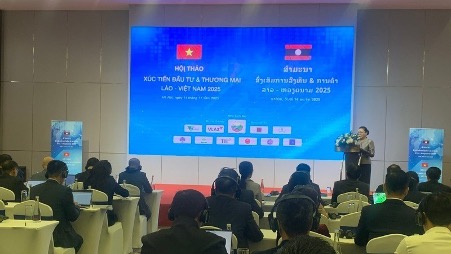
On November 14 in Hanoi, the Embassy of the Lao People’s Democratic Republic in Vietnam and Viet–Lao AZ Joint Stock Company jointly organized the 2025 Laos–Vietnam Investment and Trade Promotion Seminar under the theme “Sharing the Same Path, Securing a Sustainable Future.”
The event attracted strong interest from policymakers, representatives of ministries and agencies, and the business communities of both countries, with the aim of concretizing high-level commitments and expanding bilateral investment and trade opportunities.
Speaking at the event, Ms. Khamphao Ernthavanh, Ambassador of Laos to Vietnam, noted that Vietnam–Laos trade relations boast a tradition of more than 60 years, built and nurtured on the close and enduring bond fostered by the Parties, Governments, and peoples of the two countries. Vietnam and Laos share a common border stretching over 2,337 km, running through 10 provinces of Laos and 9 provinces and cities of Vietnam. These areas hold great development potential and strategic importance along the East–West Economic Corridor, serving as gateways for Vietnam and Laos to connect and engage with the world and regional countries.
Alongside positive achievements, she pointed out that trade relations in general—and border trade in particular—still face challenges that require closer coordination to address. The core issue lies in ensuring stable and sustainable development of bilateral border trade, fully tapping into each side’s potential and advantages. This, in turn, would contribute meaningfully to poverty reduction, rural and mountainous development, and improvement of living standards for border communities; promote socio-economic development in border provinces; build borders of peace, friendship, and cooperation; and contribute increasingly to national socio-economic development, with the goal of reaching a trade turnover of USD 5 billion in the coming period.
The seminar focused on discussions related to trade promotion and the development of investment and trade cooperation between enterprises of the two countries. Key participants included the Laos–Vietnam Cooperation Committee (Ministry of Finance), the Economic Department (Ministry of Foreign Affairs of Laos), the Department of Investment Promotion and Management, along with numerous Vietnamese and Lao enterprises operating in energy, mining, high-tech agriculture, industry and manufacturing, logistics, and import–export.
In-depth discussion sessions and roundtables centered on updates to new mechanisms and policies, including incentives and facilitation measures for import–export procedures, aiming to transform Laos from a landlocked country into a land-linked one. The seminar also introduced strategic investment opportunities in Laos, targeting the attraction of at least USD 1.7 billion in FDI annually.
Mr. Nguyễn Anh Sơn, Director General of the Import–Export Department (Ministry of Industry and Trade of Vietnam), stated that to elevate Vietnam–Laos trade relations to a new level, the governments of both countries have agreed to implement a range of important cooperation contents and signed key legal documents in the trade sector, notably the bilateral Trade Agreement signed in 2024. In particular, the Vietnam–Laos Border Trade Agreement represents a significant milestone, providing a legal framework and strong impetus for promoting bilateral trade.
After 10 years of implementation, cooperation in the industry and trade sector between the two countries has achieved comprehensive and substantive results. Specifically, import–export activities through Vietnam–Laos border gates have maintained steady growth, with two-way trade turnover increasing from approximately USD 1.1 billion in 2015 to USD 2.25 billion in 2024—doubling after a decade of implementing the agreement.
In the first nine months of 2025, bilateral trade turnover reached USD 2.36 billion, up 57% year-on-year and the highest level in the past decade. Many key pairs of border gates have become major trade hubs, contributing significantly to total bilateral trade turnover. Border markets and border-gate economic zones have received increased investment and upgrades, facilitating trade, services, and goods exchanges for border residents. Coordination among ministries, sectors, and localities of both countries in managing and controlling goods, vehicles, and border residents has also been maintained more closely, coherently, and effectively.
At the seminar, Mr. Nguyễn Anh Sơn proposed that both sides prioritize resources to accelerate the development and connectivity of transport infrastructure, promptly realize key transport projects linking border gates, warehouses, depots, and inspection–control systems, and encourage the establishment of logistics centers in border areas to reduce circulation costs. He also called for enhanced cooperation between localities of the two countries in improving border-gate infrastructure, particularly at major international border gates with high traffic volumes. In addition, he emphasized studying the connectivity of electronic data exchange systems at border gates and accelerating the simplification of quarantine and specialized inspection procedures in a transparent manner to shorten processing times.
Furthermore, he highlighted the need to organize communication and guidance programs on tariff preferences, rules of origin, and technical standards for key commodities; establish focal points to promptly support enterprises in addressing difficulties; promote stronger business linkages through trade promotion conferences and policy dialogue forums; and further enhance the substance and effectiveness of bilateral trade promotion activities, expanding such programs at the local level to increase the presence of each other’s goods.
The functional forces of both countries were also urged to strengthen information exchange, coordinate patrols, and strictly handle smuggling and trade fraud cases, while promoting the application of surveillance technologies at border gates and enhancing the role of local authorities and communities in detecting and preventing violations.
A key and most symbolic highlight of the seminar was the exchange ceremony of a Memorandum of Understanding (MOU) on strategic cooperation in logistics and distribution between Viet–Lao AZ Joint Stock Company (Vietnam) and Hung-Aloun Logistics Company (Laos).
This signing not only opens a new chapter in business cooperation between the two enterprises but also serves as vivid evidence of the commitments made by leaders of both countries—demonstrating the strong transformation of policy orientations into concrete actions and economic cooperation opportunities, contributing to the promotion of cross-border supply chains and further strengthening the great friendship, special solidarity, and comprehensive cooperation between Vietnam and Laos.
-
/ News
Vietnam-Laos Investment Cooperation: Expectations for a 10 Billion USD Breakthrough
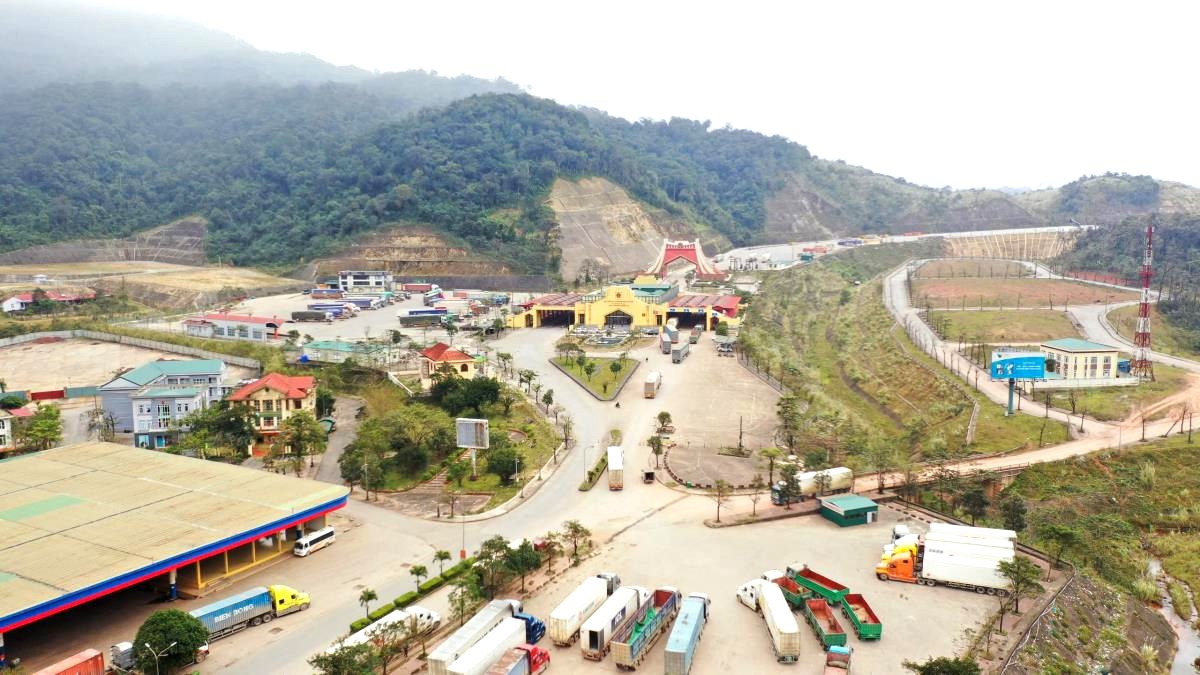
A series of major Vietnamese investment projects in Laos and the development of industrial linkage chains are expected to yield practical results, ...
-
/ News
Bringing Vietnam-Laos Cooperation into Depth, Substance, and Greater Sustainability
-
/ News
Increasing Numbers of Vietnamese Business Projects Operate Effectively, Making Positive Contributions to Lao Socio-Economic Development Across All Sectors
As part of the working program in Laos to co-chair the 48th Session of the Intergovernmental Committee on Vietnam-Laos Bilateral Cooperation, Prime...