

MOIT VIETNAM | Strengthening Viet Nam – Laos Logistics Connectivity: Current Situation and Solutions
/ News / Activities
Strengthening Viet Nam – Laos Logistics Connectivity: Current Situation and Solutions
Abstract
With a shared border of nearly 2,400 km and a special cooperative relationship, Viet Nam and Laos possess many favorable conditions to form strategic economic corridors, linking transport and logistics infrastructure, institutions and policies, as well as border markets. However, an assessment of the 2020–2024 period shows that logistics connectivity between the two countries still faces numerous bottlenecks, including uncoordinated infrastructure, high transport costs, complex customs procedures, limited levels of digitalization, and enterprise cooperation capacity that remains disproportionate to potential. On this basis, the study proposes a system of viewpoints, orientations, and solution groups to strengthen Viet Nam–Laos logistics connectivity in the coming period. Key solutions include: (i) upgrading and modernizing bilateral transport and logistics infrastructure; (ii) reforming customs procedures, implementing a “single window – single stop” mechanism, and applying digital technologies; (iii) strengthening enterprise–state cooperation, developing cross-border logistics services and e-commerce; (iv) promoting institutional cooperation, financial and investment policies; and (v) building green logistics models associated with sustainable development. The synchronized implementation of these solutions is expected to shorten transport time, reduce logistics costs, increase cargo volumes, facilitate trade, and move toward the target of USD 5 billion in bilateral trade turnover in the coming years.
Keywords: Logistics connectivity; Cross-border logistics; Transport infrastructure; Border trade.
Keywords: Logistics connectivity; Cross-border logistics; Transport infrastructure; Border trade.
1. Introduction
Viet Nam and Laos share a common border of nearly 2,400 km and are bound by a special friendship and comprehensive cooperation spanning more than six decades. This serves as an important foundation for promoting economic development, trade, investment, and especially logistics cooperation between the two countries. In the context of increasingly deep regional and international integration, Viet Nam–Laos logistics connectivity plays a key role in facilitating trade, linking supply chains, and enhancing competitiveness for enterprises, particularly small and medium-sized enterprises.
The formation of an integrated and synchronized logistics system will help optimize cross-border cargo transportation, reduce costs, shorten time, and improve trade efficiency. Incentives arising from bilateral trade agreements, border trade agreements, and commitments within ASEAN continue to open up major opportunities to build modern logistics standards, enhance traceability, and develop product branding. However, cross-border logistics between Viet Nam and Laos still faces many limitations. Infrastructure investment in border areas remains uncoordinated; many routes connecting border gates are weak; transport costs are high, accounting for 20–30% of goods value; customs clearance time remains slow, averaging 2–5 hours; and differences in customs regulations and documentation procedures reduce supply chain efficiency. These are major obstacles when compared with other countries in the region.
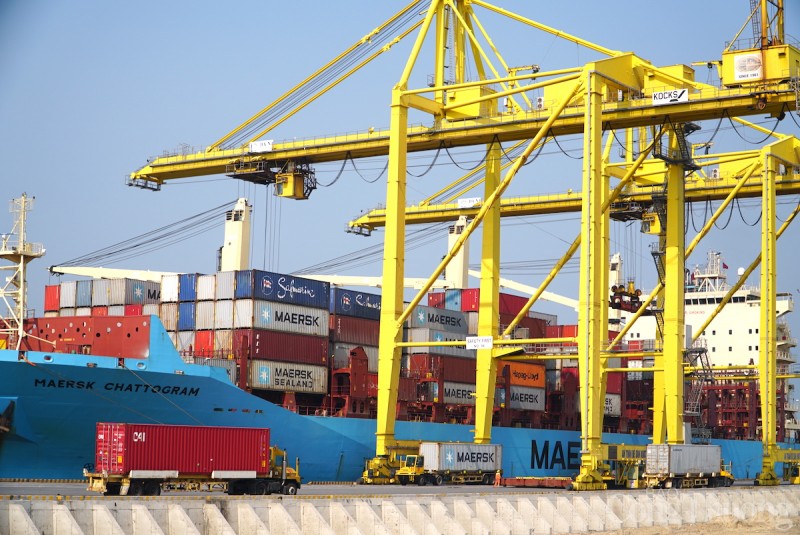
Nevertheless, cooperation potential between the two countries remains very large. The two countries have a diverse system of border gates with 9 international border gates and many main and auxiliary border gates; border trade accounts for up to 90% of total bilateral turnover; Viet Nam is the third-largest supplier of goods to Laos and also one of its leading investors. In the first nine months of 2024, Viet Nam’s exports to Laos reached USD 442.91 million, continuing a positive growth trend. Viet Nam and Laos have set the objective of improving the quality of economic cooperation, striving to increase bilateral trade by 10–15% in 2025 and moving toward USD 5 billion in the coming period. To achieve this goal, the development of a modern and smooth logistics system is regarded as a key solution. Investment in key transport routes, logistics centers, digital customs reform, and the application of new technologies will help reduce costs, enhance competitiveness, and create a sustainable foundation for long-term trade connectivity between the two countries.
2. Current Status of Viet Nam – Laos Logistics Connectivity (2020–2024)
Logistics connectivity between Viet Nam and Laos during the 2020–2024 period has achieved certain positive results, particularly in improving transport and customs clearance time, as well as strengthening regional cooperation. However, logistics costs between the two countries remain high, infrastructure remains uncoordinated, and levels of technology application are uneven—these are the main bottlenecks hindering connectivity. The primary causes stem from difficult geographical conditions (mountainous terrain, landlocked location), limited capacity of logistics enterprises, and incomplete institutional coordination mechanisms at the border between the two countries.
Road transport infrastructure plays a dominant role in bilateral logistics connectivity. In recent years, Laos has made improvements by putting into operation the Vientiane–Vang Vieng expressway (the first expressway in Laos) at the end of 2020, shortening the route by 43 km compared with the old National Highway 13 on the main axis from Vientiane to the north. Nevertheless, most of Laos’s road network still runs through rugged mountainous terrain, with narrow roads, and public investment has mainly focused on opening new routes rather than upgrading and maintaining existing ones. These limitations lead to very high road transport costs—accounting for about 50–60% of total logistics costs on the Viet Nam–Laos route—because vehicles must operate in difficult terrain and often return empty due to imbalanced cargo flows between the two countries. In reality, cargo volumes from Viet Nam to Laos are much larger than in the opposite direction, resulting in many trucks returning empty, wasting transport capacity and increasing freight rates.
To address this issue, Viet Nam and Laos, together with international partners, are implementing projects to upgrade strategic transport corridors. In September 2022, the Lao Ministry of Public Works and Transport announced a new initiative supported by the World Bank to improve connectivity and trade in the East–West region. This project will upgrade Lao National Route 2 (connecting Thailand – Laos – Viet Nam) to Asian highway standards, thereby forming an East–West corridor connecting with existing North–South routes; the upgraded design emphasizes resilience to storms, floods, and landslides caused by climate change. The project also includes the development of dry ports, border markets, and truck terminals, enabling farmers in northern Lao provinces to bring products to domestic and export markets more conveniently. At the same time, a USD 200 million World Bank loan is being implemented under a results-based contract model to improve approximately 400 km of local roads in five northern Lao provinces, toward a safer, more efficient, and climate-resilient road network, thereby strengthening domestic and regional connectivity for Laos.
Regarding railway transport, connectivity between Viet Nam and Laos is still at an early stage of development. Laos is the only landlocked country in Southeast Asia and therefore faces many difficulties in expanding trade; currently, Lao freight transport still relies mainly on road transport (and partly on waterways) due to the very limited railway network. To connect with Thailand, Laos has only one short railway line from Thanaleng station (Vientiane) to Nong Khai (Thailand). According to data updated in early 2024, the total length of Laos’s railway network increased from 250.4 km in 2020 to 271.7 km in 2023 and approximately 273.8 km in 2024, and is forecast to reach 288.5 km by 2029. Railway transport has great potential to reduce costs by 30–50% compared with road transport; therefore, railway development is considered a strategic priority direction for Laos in the future. In practice, Laos has become a focal point in China’s “Belt and Road Initiative.” The intermodal railway line from Kunming (China) passing through Laos, Thailand, and Malaysia includes the 414 km section from Boten (Lao–China border) to Vientiane, completed in 2021, opening up a North–South transport axis through Laos and laying the foundation for deeper railway connectivity in the region. Currently, the two countries are also cooperating to promote the Vientiane–Vung Ang railway project, aimed at enabling Laos to directly access Viet Nam’s seaports in the future.
In terms of cargo volume and structure, bilateral trade turnover has tended to increase fairly steadily at an average rate of about 10–12% per year in recent years. Viet Nam is currently Laos’s third-largest trading partner, and the commodity structure is complementary—Viet Nam mainly exports processed industrial goods and fuels (such as petroleum products) to Laos, while Laos exports raw materials such as minerals and agricultural products to Viet Nam. Despite good growth, the scale of bilateral trade remains small, only about USD 1.6–1.8 billion per year prior to 2024, accounting for a very small proportion of Viet Nam’s total foreign trade. Trade between the two countries still relies heavily on raw materials and has not yet formed shared high-value supply chains. Notably, a portion of Laos’s exports must still transit through Thailand to reach international seaports due to Laos’s lack of coastline and dependence on transit countries for port infrastructure.
Regarding customs procedures and border clearance, both countries have made progress in modernizing processes. Viet Nam and Laos have both applied electronic customs systems and gradually connected to the ASEAN Single Window mechanism for electronic customs data exchange. As a result, when documentation is complete, average clearance time is only about 2–6 hours. However, at some border gates, procedures remain manual and congestion may occur during peak times; if shipments require physical inspection, clearance time may extend to 1–2 days. The causes of these limitations include inconsistent regulations and standards between the two countries, limited information technology infrastructure and customs human resources, as well as complex quarantine and food safety inspection procedures that increase clearance time.
In terms of technology application in logistics, Viet Nam is generally ahead. Viet Nam has deployed modern IT systems in logistics, such as automated customs clearance systems, transport and warehouse management software, GPS-based tracking, and electronic data interchange. Some major dry ports and bonded warehouses in Viet Nam have been automated to a certain extent. In contrast, the level of digitalization in Laos remains very low: most Lao logistics enterprises are small-scale with limited capital and rely mainly on manual management, resulting in a large digital gap between large and small enterprises. The reasons include weak IT infrastructure, high investment costs for technology, a shortage of digitally skilled human resources, and limited readiness for digital transformation among many enterprises. This situation limits the level of digitalization in bilateral logistics connectivity and prevents effective use of technology platforms to enhance efficiency.
Finally, regarding institutional and enterprise cooperation, there is a difference between the government level and the enterprise level. At the macro level, Viet Nam and Laos maintain a particularly stable political–diplomatic relationship, have signed many bilateral agreements, and participate together in regional cooperation frameworks such as ASEAN and the Greater Mekong Subregion (GMS). Many key logistics projects are being jointly promoted, notably the Vientiane–Vung Ang railway (connecting Laos to Viet Nam’s central seaports) and plans to upgrade Vung Ang Port to provide Laos with more convenient sea access. However, enterprise-level cooperation remains limited—there are very few large-scale logistics joint ventures between the two countries, and Vietnamese and Lao logistics enterprises face strong competition from Thai enterprises in the Lao market. The reasons are that cooperation has mainly focused at the government level, while the private sectors of both countries lack capital and technology for cross-border linkages, and there is still no effective incentive mechanism to encourage deeper cooperation between enterprises.
3. Proposed Solutions to Strengthen Viet Nam – Laos Logistics Connectivity
In the face of both broad opportunities and significant challenges in Viet Nam–Laos logistics connectivity, identifying key solution groups is an urgent requirement to overcome bottlenecks, enhance cargo circulation efficiency, and promote bilateral trade growth. These solutions not only address immediate obstacles but also lay the foundation for long-term linkage, aligned with development orientations for the 2026–2030 period and deeper integration into regional supply chains.
3.1. Upgrading and Modernizing Bilateral Transport and Logistics Infrastructure
- Strategic road investment: Accelerate completion of expressways connecting border gates (Cam Lo – Lao Bao, Ha Tinh – Cau Treo), upgrade National Highways 8, 9, 12, and mountain passes in Laos to increase operating speed and standardize bridge and road load capacities, thereby reducing transport costs.
- Cross-border railway development: Promptly implement the Vientiane–Vung Ang railway to reduce transport costs by 20–30% and shorten transit time to 1.5–2 days, while forming a multimodal transport chain integrating road, rail, and sea.
- Multimodal transport and logistics center development: Build logistics centers and ICDs at Lao Bao, Cha Lo, Cau Treo, and Bo Y; develop bonded warehouses, container yards, cold storage facilities, and consolidation–deconsolidation services to optimize load capacity and reduce border congestion.
3.2. Development of Cross-Border E-Commerce
- E-commerce logistics infrastructure: Build order fulfillment warehouses in Quang Tri and Ha Tinh; arrange transshipment stations at border gates and cooperate in developing last-mile delivery networks in Laos.
- Digital technology: Connect Viet Nam–Laos e-commerce platforms; apply blockchain and QR codes for traceability; complete cross-border electronic payment systems.
- Policies and procedures: Simplify clearance for small parcels, apply single declaration mechanisms, provide fee and tax incentives for e-commerce goods; establish “e-commerce logistics centers” and train SMEs in both countries in e-commerce and digital marketing.
- Sustainable development: Encourage green delivery, use of biodegradable packaging, and standardization of green supply chains.
3.3. Institutions, Finance, Investment Support, and Customs Procedures
- Financial and investment mechanisms: Mobilize ODA and PPP for key infrastructure projects; provide tax and credit incentives for logistics enterprises in border areas.
- Customs: Expand the “single window – single stop” model at major border gates; apply pre-arrival declarations; enhance customs capacity, extend working hours; invest in modern inspection equipment; simplify procedures and strengthen data exchange.
3.4. Application of Science, Technology, and Digitalization
- Supporting Laos’s digital capacity building: Connect Lao–Viet Nam electronic systems via ASEAN national single windows; train digital human resources for Laos; share real-time data.
- Digital border gate infrastructure: Establish bilateral data centers; apply QR/RFID/GPS technologies to reduce inspection time.
- Supply chain digitalization: Encourage transport and warehouse management systems, electronic data interchange; popularize e-Form D and e-payment; apply e-logistics solutions; create a shared database on cargo flows and freight rates.
3.5. Supply Chain Diversification – Increasing Cargo Volume and Value
- Commodity diversification: Increase exports of consumer goods and processed agricultural products to Laos; develop return cargo from Lao minerals and agricultural products.
- Strategic logistics corridor formation: Strengthen the East–West Economic Corridor (Savannakhet – Lao Bao – Da Nang), the North–South corridor (Pakse – Bo Y – Quy Nhon), and the Vientiane – Cau Treo – Vung Ang route.
3.6. Bilateral Cooperation and Enterprise Capacity Development
- Institutional cooperation: Improve the legal framework for cross-border transport; develop mutual recognition agreements for quarantine and food safety; establish inter-agency coordination mechanisms.
- Enterprise cooperation: Establish Viet Nam–Laos logistics joint ventures; form cross-border logistics associations; provide financial support and promote PPP models.
- Human resource development: Conduct bilateral training in logistics, customs, and digital technology; strengthen training programs at universities and research institutes.
3.7. Green Logistics and Sustainable Development
- Clean vehicles: Support enterprises in investing in Euro V trucks and electric/hybrid vehicles.
- Emission reduction: Develop a carbon measurement roadmap for Viet Nam–Laos logistics aligned with NDC targets.
- Green infrastructure: Develop solar energy stations and electric charging stations at border gates.
- International standards: Apply traceability standards and environmental certifications to meet global supply chain requirements.
4. Conclusion
Research on strengthening logistics connectivity between Viet Nam and Laos has affirmed the pivotal role of cross-border logistics systems in promoting trade, investment, regional economic development, and enhancing national competitiveness. With a long shared border and a special relationship, the two countries have favorable conditions to form strategic economic corridors; however, the 2020–2024 assessment shows that bilateral logistics connectivity still faces many bottlenecks such as uncoordinated infrastructure, high costs, complex procedures, limited digitalization, and weak enterprise cooperation. The synchronized implementation of the proposed solutions will help shorten transport time, reduce logistics costs, increase cargo volumes, facilitate trade, and contribute to moving bilateral trade turnover toward the USD 5 billion target in the coming years. Strengthening Viet Nam–Laos logistics connectivity is not only economically significant but also a driving force for promoting the comprehensive strategic partnership between the two countries, contributing to building a peaceful, cooperative, and sustainably developing border region, while enabling both countries to participate more deeply in regional and international value chains.
-
/ News
Vietnam-Laos Investment Cooperation: Expectations for a 10 Billion USD Breakthrough
A series of major Vietnamese investment projects in Laos and the development of industrial linkage chains are expected to yield practical results, ...
-
/ News
Bringing Vietnam-Laos Cooperation into Depth, Substance, and Greater Sustainability

-
/ News
Increasing Numbers of Vietnamese Business Projects Operate Effectively, Making Positive Contributions to Lao Socio-Economic Development Across All Sectors
As part of the working program in Laos to co-chair the 48th Session of the Intergovernmental Committee on Vietnam-Laos Bilateral Cooperation, Prime...